


Paramotor - taking the extreme one step further
So, you have probably done some extreme sports, but have you tried out parachuting with a motor? Many find this a little too extreme and prefer to stick to more conventional approaches. However, this is certainly an Iconic experience that is worth a shot. It is one of the most exciting ways to experience flight first hand and also to rise above all the petty worries of everyday life.
Before we continue, let’s take a closer look at what this is all about. The word paramotor was obtained by merging the words parachute and motor, which is actually a pretty accurate illustration of the sport itself. Basically, we are talking about paraglading taken to the next level by attaching a motor to add some extra speed and excitement. While the origins of paragliding are shrouded in mystery and controversy, we do have a few certainties about paramotoring. The term paramotor was coined by Mike Byrne back in the second half of 20th century but became truly popular in France, due to La Moutte’s experimentations on the paraglider.
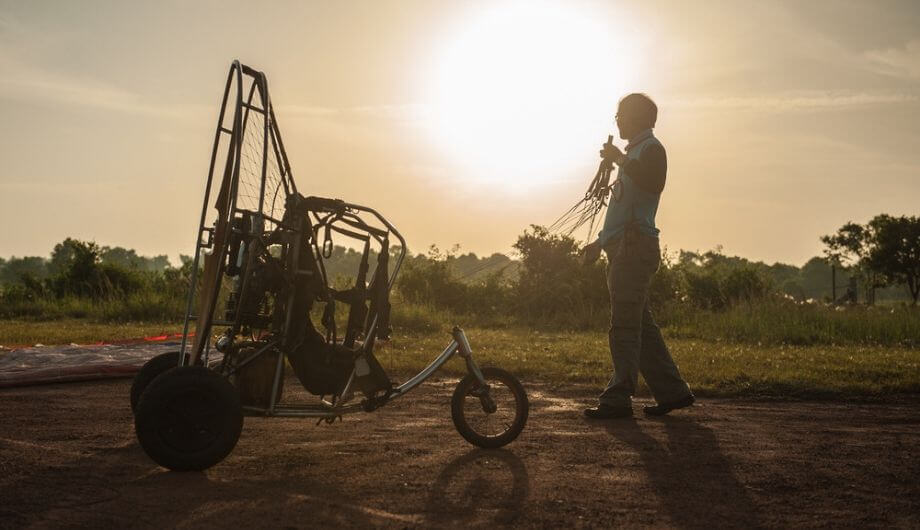
Paramotors can be split into two main categories, based on departure type: on wheels and on foot. Depending on this, the motor placement differs. In the first case, the pilot can relax on an attached car of small dimensions, which usually has 3 or 4 wheels. One of the benefits of this version is that there is the option of two people sharing the experience. So you can either do this with your best friend or even a girl you wish to impress (if she feels up for it). The second option, on foot departure is only a solo experience and the propeller with a motor is secured right on your back similar to a backpack, with straps attached to your chest and arms. As you can see, the two options are different enough to make it worth trying them both out.
Some specifics
I bet you are curious about some specific details, well here they are:
- 23 kg: the average weight of a motor (but it can vary anywhere between 18-34). However, once in flight, you will no longer feel the weight of the motor.
- 80 cc - 350 cc: typycally engines used for paramotors are between these parameters;
- the paramotor engine runs on petrol;
* for those of you who are interested in alternative power sources, electric motors can also be used, but the duration of the flight is drastically reduced
- 40km/h: the average speed of a paramotor;
- we cannot offer any specific information on the engine size and wings, as these are greatly influenced by the pilot’s weight.
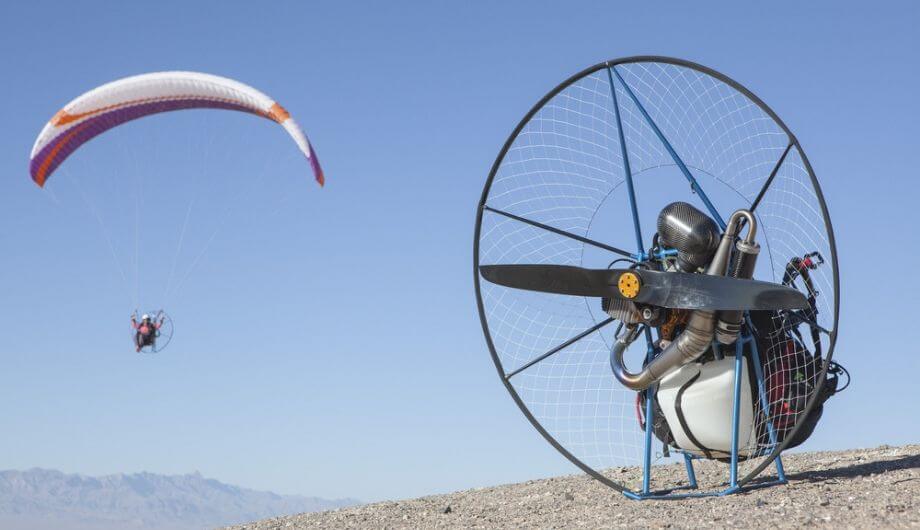
It all starts with the push of a button. Once everything is prepared and secured in its place, the thrill begins. To put it very simply, you will run forward while simultaneously lifting the wings and powering the motor with a push of a button. The sport is very similar to paragliding, the main difference is that in parachuting with a motor you achive a greater speed. Also, the wings used on paramotors are shaped slightly differently, as they are adapted for higher speeds. Actually, experts agree that the control of wings is the most challanging part of the entire operation. Once you have this under control, everything else will be a piece of cake. While paramotoring will prove to be easier for those who have done similar sports before, do not get discouraged, there are training sessions available for anyone interested. During these sessions, you will undergo something called kiting, flight without the motors being attatched. All in all, your training will cover all you need to know in order to enjoy a safe experience, starting with the three basics: how to launch, flight control and landing.
Furthermore, the training will also cover some more theoretical aspects like meteorology, but which you will surely put into practice. These are some of the topics you will cover: athmospheric stability, humidity, visibility, cloud conditions. Having a basic knowledge of terrain features is another important aspect, as these have an influence in all three stages (launch, flight, landing). While this might not be the most fun part of the trainig, it is undoubtedly important, as you will be completely exposed to the mercy of the elements during parachuting with a motor.
If you find that you enjoy this experience and crave for more, there are associations and groups of enthusiasts you can join to share your passion. There are of course many perks to parachuting with a motor... the adrenaline, the view, the stories to be told afterwards... But another great and practical aspect is that you can explore areas that are otherwise off limits. It will certainly be an experience to remember and reminisce about.
Hello, my name is Paramotor!
Before we continue, let’s take a closer look at what this is all about. The word paramotor was obtained by merging the words parachute and motor, which is actually a pretty accurate illustration of the sport itself. Basically, we are talking about paraglading taken to the next level by attaching a motor to add some extra speed and excitement. While the origins of paragliding are shrouded in mystery and controversy, we do have a few certainties about paramotoring. The term paramotor was coined by Mike Byrne back in the second half of 20th century but became truly popular in France, due to La Moutte’s experimentations on the paraglider.
Paramotors can be split into two main categories, based on departure type: on wheels and on foot. Depending on this, the motor placement differs. In the first case, the pilot can relax on an attached car of small dimensions, which usually has 3 or 4 wheels. One of the benefits of this version is that there is the option of two people sharing the experience. So you can either do this with your best friend or even a girl you wish to impress (if she feels up for it). The second option, on foot departure is only a solo experience and the propeller with a motor is secured right on your back similar to a backpack, with straps attached to your chest and arms. As you can see, the two options are different enough to make it worth trying them both out.
Some specifics
I bet you are curious about some specific details, well here they are:
- 23 kg: the average weight of a motor (but it can vary anywhere between 18-34). However, once in flight, you will no longer feel the weight of the motor.
- 80 cc - 350 cc: typycally engines used for paramotors are between these parameters;
- the paramotor engine runs on petrol;
* for those of you who are interested in alternative power sources, electric motors can also be used, but the duration of the flight is drastically reduced
- 40km/h: the average speed of a paramotor;
- we cannot offer any specific information on the engine size and wings, as these are greatly influenced by the pilot’s weight.
And away we go!
It all starts with the push of a button. Once everything is prepared and secured in its place, the thrill begins. To put it very simply, you will run forward while simultaneously lifting the wings and powering the motor with a push of a button. The sport is very similar to paragliding, the main difference is that in parachuting with a motor you achive a greater speed. Also, the wings used on paramotors are shaped slightly differently, as they are adapted for higher speeds. Actually, experts agree that the control of wings is the most challanging part of the entire operation. Once you have this under control, everything else will be a piece of cake. While paramotoring will prove to be easier for those who have done similar sports before, do not get discouraged, there are training sessions available for anyone interested. During these sessions, you will undergo something called kiting, flight without the motors being attatched. All in all, your training will cover all you need to know in order to enjoy a safe experience, starting with the three basics: how to launch, flight control and landing.
Furthermore, the training will also cover some more theoretical aspects like meteorology, but which you will surely put into practice. These are some of the topics you will cover: athmospheric stability, humidity, visibility, cloud conditions. Having a basic knowledge of terrain features is another important aspect, as these have an influence in all three stages (launch, flight, landing). While this might not be the most fun part of the trainig, it is undoubtedly important, as you will be completely exposed to the mercy of the elements during parachuting with a motor.
If you find that you enjoy this experience and crave for more, there are associations and groups of enthusiasts you can join to share your passion. There are of course many perks to parachuting with a motor... the adrenaline, the view, the stories to be told afterwards... But another great and practical aspect is that you can explore areas that are otherwise off limits. It will certainly be an experience to remember and reminisce about.
user rating :
4.92 stars (63 votes)


A student of life and probably for life. She likes putting theory into practice and to challenge norms. Currently on a mission to understand human behavior and interaction. Always on the lookout for the next challenge.